Jira alternative
Takahe vs Jira: time and money built in, without the setup.
Jira is Atlassian’s work tracker for teams of every size, with sprints, custom workflows and thousands of integrations. Takahe is made for agencies, freelancers and small teams that bill their time: tasks, a timer on every task and project profit in one app.
Already have an account? Log in
Which one fits you?
Choose Takahe if
- You bill clients for your time and want hours, cost and profit per project without a spreadsheet.
- You want a timer, timesheets and budgets in the tool itself, not from Marketplace apps.
- You want each client in its own team, and clients on their project without seeing your rates.
- Your AI coding agents should pick up tasks and track their time under their own name.
Choose Jira if
- You plan in sprints, with backlogs, story points and releases.
- You need custom workflows, custom fields and automation across many teams.
- You work in other Atlassian tools, such as Confluence and Jira Service Management, or rely on Marketplace apps.
- You need SAML single sign-on, data residency or other enterprise controls.
Feature by feature
Takahe vs Jira, side by side
What each tool offers on its own, without add-ons from a marketplace. Checked on November 22, 2026 on Atlassian’s own pages, listed below.
| Feature | Takahe | Jira |
|---|---|---|
| Views | Takahe Yes. Board, list and calendar of the same tasks. | Jira Yes. Board, list, backlog, calendar and timeline views. |
| Time tracking | Takahe Yes. A timer on every task and manual entries, with notes, tags and a billable flag. | Jira Partly. You log work and set original and remaining estimates on each work item. Timers come from Marketplace apps. |
| Timesheets and time reports | Takahe Yes. A Time page per project and reports by project, list, person or task, with CSV export. | Jira Partly. A time tracking report that compares estimates with logged time. Timesheets come from Marketplace apps such as Tempo. |
| Rates, cost and profit | Takahe Yes. A cost rate and a bill rate per person and project. Reports show cost, revenue and profit. | Jira No. No cost or bill rates of its own. |
| Project budgets | Takahe Yes. A budget in hours, in euros or both, with alerts at 80% and 100%. | Jira No. No budgets in hours or money. Capacity planning on Premium plans people’s hours. |
| AI agents over MCP | Takahe Yes. A built-in MCP server. An agent works on a project under its own name and tracks its own time. | Jira Yes. The Rovo MCP server, and AI agents you assign work items to, on paid plans. |
| Clients and guests | Takahe Yes. Invite clients to a team or to one project. As members, they never see rates or profit. | Jira Partly. Free guests on paid plans, up to 5 per paid user, each in one space. |
| Sprints and roadmaps | Takahe No. No sprints, story points, roadmaps or Gantt charts. | Jira Yes. Backlogs, sprints, releases and a timeline, with advanced planning on Premium. |
| Custom fields and automations | Takahe Partly. Lists as stages, tags, priorities and estimates. No custom fields or automation rules. | Jira Yes. Custom workflows, custom fields and automation, with a monthly limit per plan. |
| Integrations | Takahe Partly. Webhooks, an MCP server and a Chrome extension. No integrations marketplace. | Jira Yes. Over 3,000 apps on the Atlassian Marketplace. |
| Mobile | Takahe Partly. Made for the phone’s browser and installs to the home screen. No app in the app stores. | Jira Yes. Apps for iOS and Android. |
| Self-hosting | Takahe No. Cloud only. | Jira No. Data Center is no longer sold to new customers since March 30, 2026. |
| Sign-in and SSO | Takahe Partly. Passkeys and two-factor authentication. No SAML single sign-on. | Jira Yes. SAML single sign-on through Atlassian Guard, a separate subscription below Enterprise. |
A timer on every task
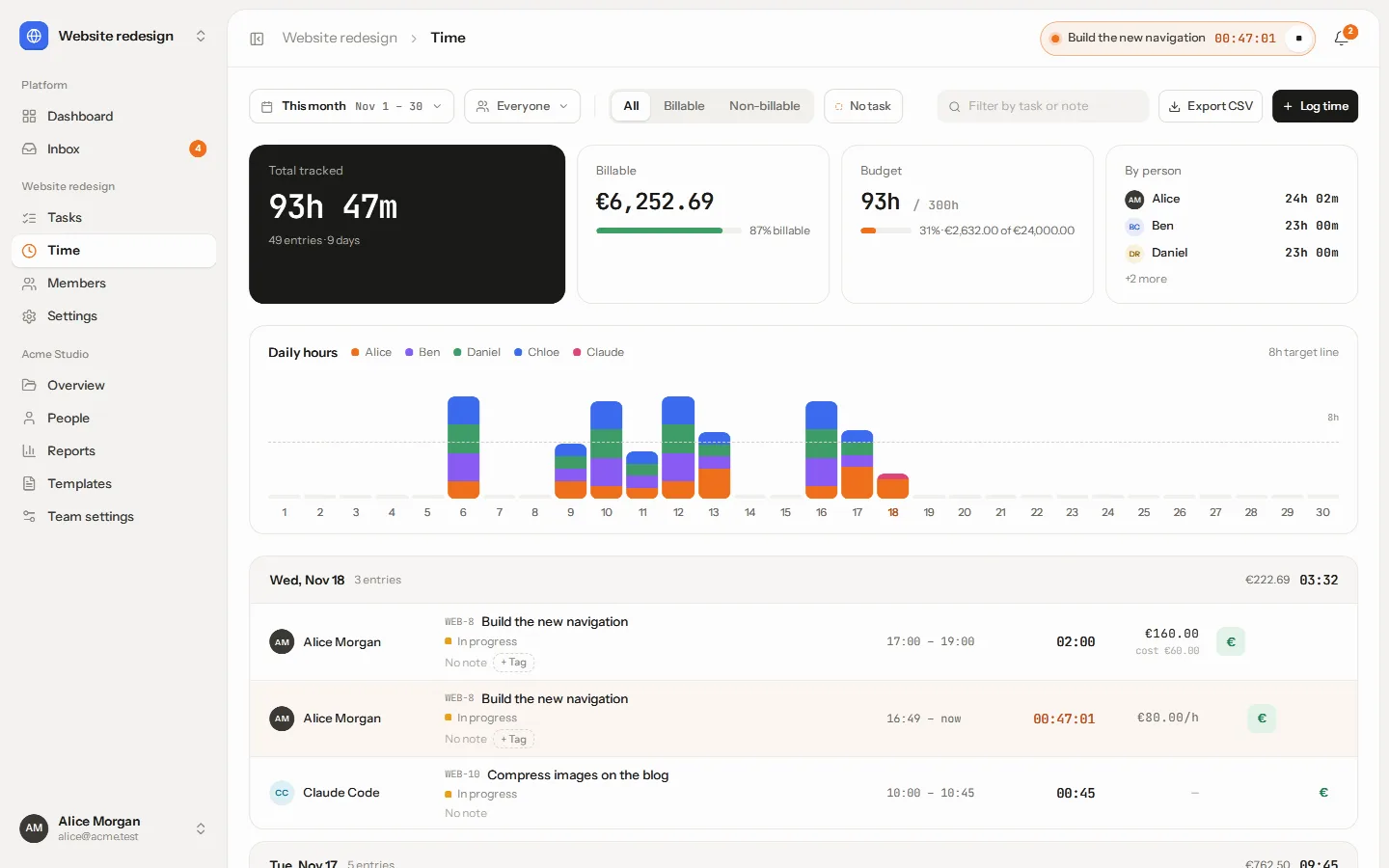
In Jira, you log work on a work item, and timers and timesheets come from Marketplace apps. In Takahe, every task has a play button, and every project has a Time page.
- One click on a card starts the timer, which stays in the top bar on every page
- Log forgotten time afterwards with a start and an end, or a duration such as 1:30
- Each project’s Time page sums up its hours, people and days, with CSV export
See whether a project pays
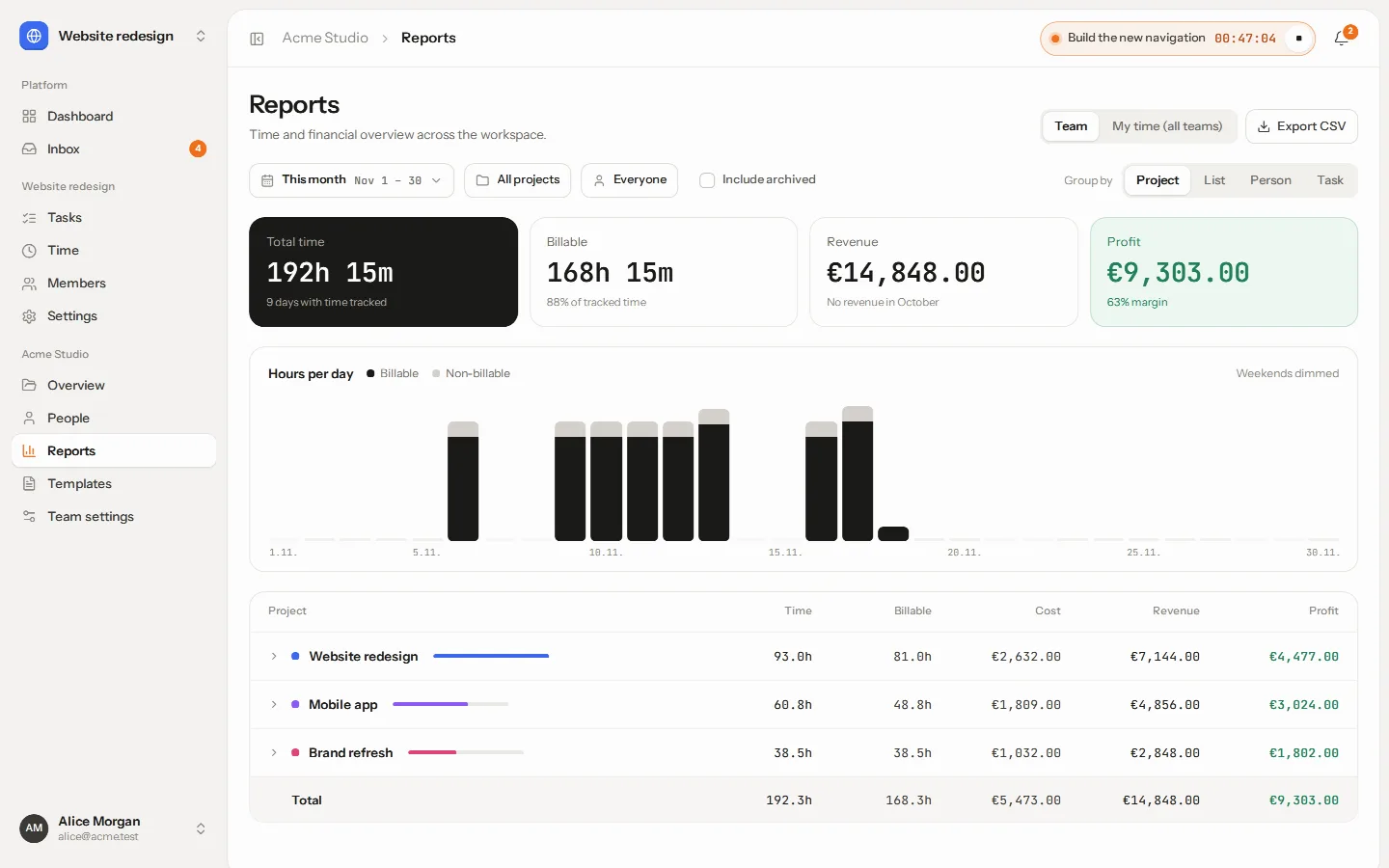
Jira counts hours but has no rates or money budgets of its own. Takahe turns each hour into cost and revenue as it is tracked, so you see a project’s profit while the work happens.
- A cost rate and a bill rate per person, set for the team and adjusted per project
- Budgets in hours or euros, with alerts at 80% and 100%
- Only the people who manage a project see the money
Up and running in minutes
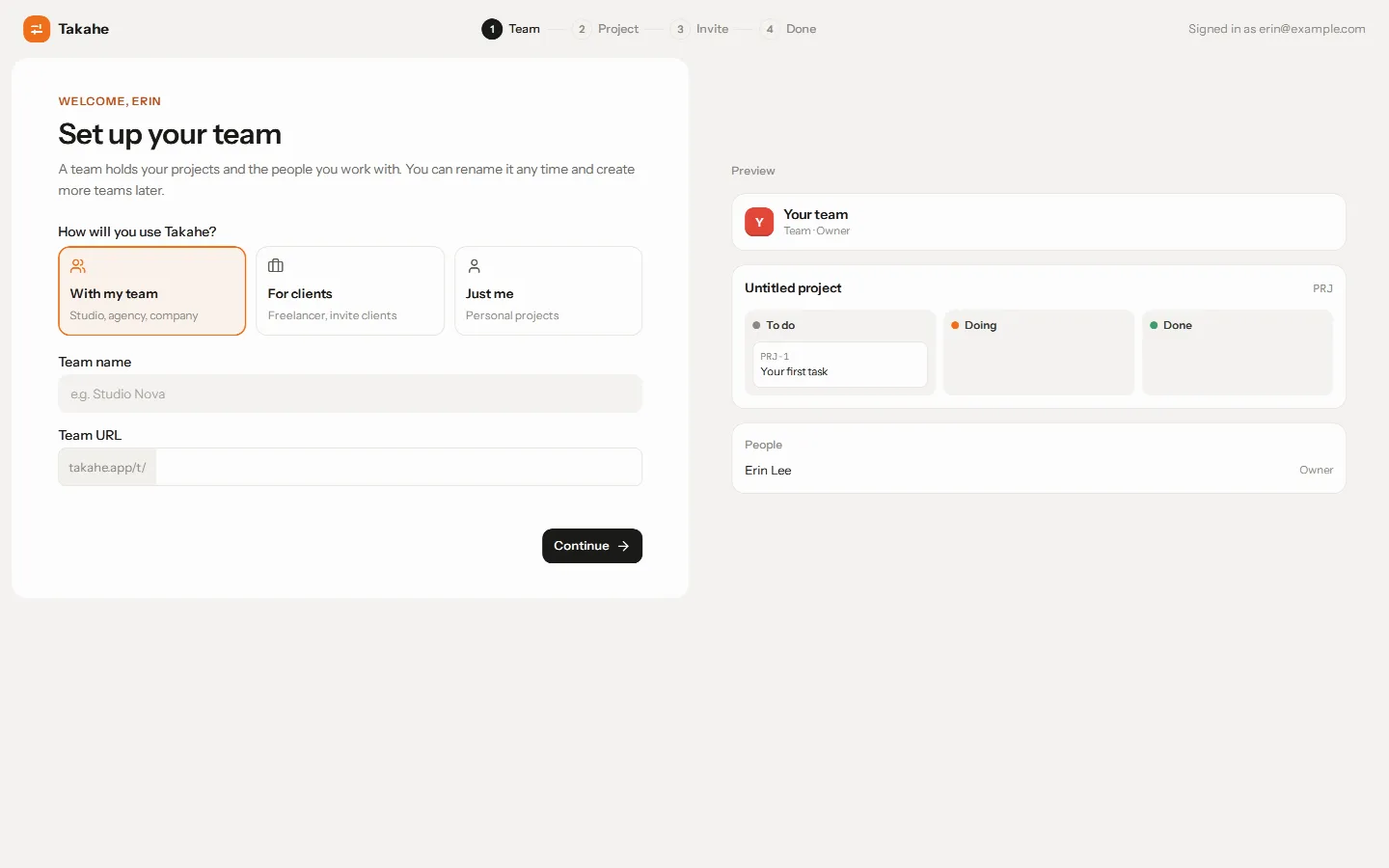
There are no workflows, fields or permission schemes to configure. A short wizard creates your team and first project, and you invite your people.
- Start from a blank board or a template with lists and starter tasks
- Invite your teammates by e-mail with a role
- Board, list and calendar views work from the first task
AI agents that track their own time
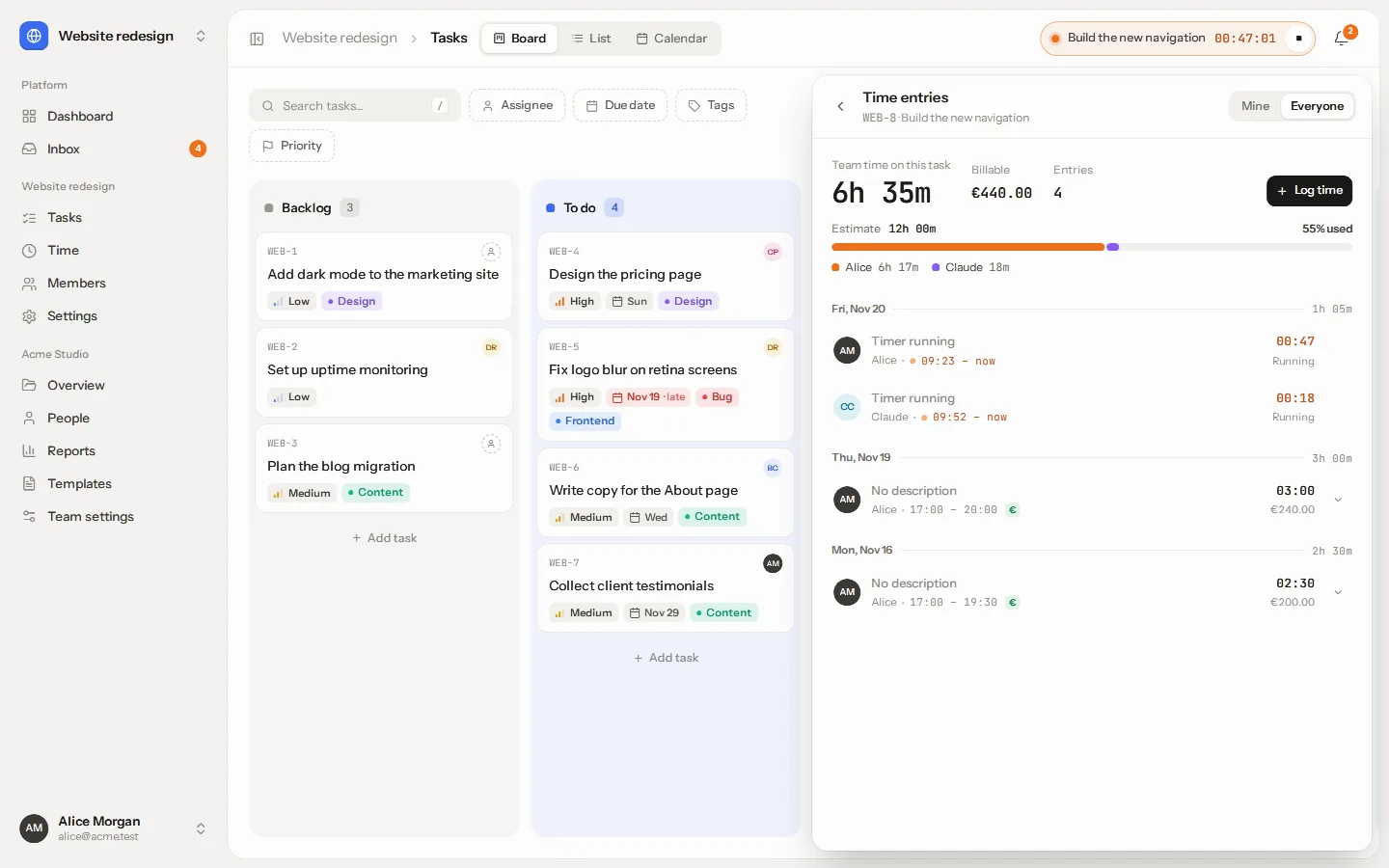
Connect Claude Code, Codex or Cursor to a project. The agent picks up tasks, reports back in comments and runs its own timer, so its time shows up in reports next to yours.
- A project token gives the agent its own name, marked “mcp”, on one project
- It reads tasks and files, comments, creates subtasks and moves cards
- It never sees rates or profit and can’t sign in to the web app
FAQ
Questions, answered
Is Takahe a good Jira alternative?
For agencies, freelancers and small teams that bill their time, yes: tasks, time tracking and project profit are in one app, with nothing to install. For teams that plan in sprints with custom workflows, Jira is the better fit.
Does Jira have time tracking?
Jira lets you log work and set original and remaining estimates on work items, and its time tracking report compares them. Timesheets and billable hours come from Marketplace apps such as Timesheets by Tempo. Takahe has a timer, timesheets, rates and budgets built in.
Does Takahe have sprints or a backlog?
No sprints. In Takahe, a project is a board of lists, such as Backlog, To do, In progress and Review, and its tasks have due dates, priorities and estimates. If you plan in sprints with story points, Jira fits better.
Can I move my work from Jira to Takahe?
There is no Jira import. Paste a list of task titles into a Takahe list and each line becomes a task, or start from a project template. An AI agent connected to both tools over MCP can also copy your open work for you.
How we compared
We checked what this page says about Jira on November 22, 2026, on these pages from Atlassian. Plans and features change, so look there for the latest.
- Jira pricing and plans
- Log time on a work item
- Timesheets by Tempo on the Atlassian Marketplace
- Collaborate on work items with AI agents
- Atlassian Rovo MCP Server
- Manage guest access in Jira
- Data Center end of life
Jira and Atlassian are trademarks of Atlassian. Takahe isn’t affiliated with or endorsed by Atlassian.
Try Takahe on a real project.
Create your account, set up a project and track your first hour in a few minutes. Keep Jira open next to it and compare for yourself.
Already have an account? Log in